
Hairballs in Cats: Causes, Prevention and How Hairball Treats Can Help
Key Takeaways
Hairballs are a common byproduct of your cat’s grooming routine, but frequent ones aren’t something every cat should experience — a few everyday habits can help reduce them.
Regular brushing, good hydration, and a consistent routine are the most effective ways to reduce the amount of loose fur your cat swallows in the first place.
Hairball treats for cats can support healthy digestion as part of a daily routine — they’re a helpful, easy-to-use addition, not a replacement for grooming or vet care.
Knowing when to call the vet matters: frequent hairballs, repeated vomiting without producing one, or changes in appetite and energy all warrant a professional check.
If you share your home with a feline, you’ve probably heard that unmistakable sound — the retching, the hacking, the dramatic 3am performance — followed by the appearance of a cat hairball on your favourite rug. Lovely. But what exactly are hairballs, and should you be worried about them? Here’s the good news: while a cat hairball now and then is a fairly normal part of grooming, frequent ones don’t have to be a regular feature of life with your cat. With a few everyday habits — and a little help from the right treats — you can help keep things moving smoothly. Let’s dig in.
In This Article:
What causes hairballs in cats
Signs of a hairball vs. something more serious
How to prevent hairballs
How hairball treats can help
When to see a vet
What Causes Hairballs in Cats?
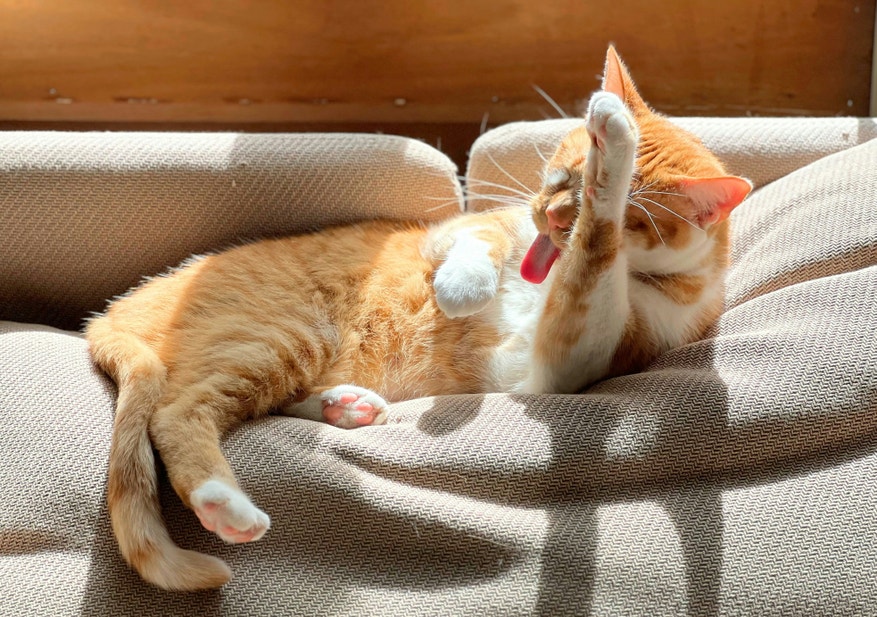
A cat hairball (technically called a trichobezoar, if you want to impress people at parties) is exactly what it sounds like — a compacted clump of fur that collects in your cat’s stomach and eventually comes back up. But how does all that fur get there in the first place? The answer is surprisingly simple: grooming.
Grooming and swallowed fur. Your cat’s tongue is covered in tiny, backward-facing hooks called papillae. These little barbs are brilliant for removing loose fur and dirt — but they also mean that most of the fur your cat grooms gets swallowed. For most cats, this swallowed hair passes harmlessly through the digestive tract and comes out the other end in the litter box. When it doesn’t, it can build up in the stomach and form a hairball.
Coat length and shedding. Long-haired cats — think Persians, Maine Coons, and Ragdolls — naturally ingest more fur than short-haired breeds. The same goes for any cat during heavier shedding periods, which in Australia and New Zealand often align with seasonal changes. More loose fur in the coat means more fur heading south at grooming time.
Overgrooming. Some cats take grooming a little too far. Excessive grooming linked to stress, boredom, or skin irritation can significantly increase the amount of fur a cat swallows. If you notice your cat licking the same patch obsessively or creating bald spots, it’s worth looking at what might be driving the behaviour — and chatting to your vet about it.
Not always just fur. In some cases, an underlying digestive issue can affect how well fur moves through the gastrointestinal tract, contributing to more frequent hairballs. If your cat is producing hairballs regularly despite good grooming habits, there may be more going on than meets the eye.
The takeaway? A cat hairball every now and then is normal. Several a week, or a sudden change in frequency, is worth paying attention to.
Infographic suggestion: Occasional vs Frequent Hairballs Chart — a side-by-side visual distinguishing normal, occasional hairballs from frequency or symptoms that warrant a vet visit.
Signs of a Hairball vs. Something More Serious
So how do you know when it’s just a hairball — and when it might be something that needs a vet’s attention? Most cat parents have seen the routine: the crouching, the retching, the hacking sounds, and eventually the production of a small, cigar-shaped mass of fur (often with a bit of bile or food mixed in). It’s not pretty, but it’s usually over within a few minutes.
Normal hairball signs include:
Occasional hacking or retching that produces a hairball
A small amount of bile or undigested food alongside the fur
Your cat otherwise acting completely normal — eating, playing, and using the litter box as usual
When it might be something more serious:
Repeated hacking or retching that doesn’t produce anything
Vomiting that continues over several hours or days
Loss of appetite or refusing to eat
Lethargy or a noticeable drop in energy
A swollen or sensitive belly
Constipation or diarrhoea
These signs can sometimes indicate that a hairball has caused an intestinal blockage, or that something else entirely is going on — from gastrointestinal issues to other underlying conditions. A blockage is a medical emergency, so if your cat is retching repeatedly without producing anything, or showing any of the signs above, don’t wait. Call your vet.
The simple rule: if something feels off — even if you’re not sure — a quick call to your vet is always worth it. They’d rather you ask than wait.
How to Prevent Hairballs in Cats
The best way to deal with hairballs? Stop them before they start. Cat hairball prevention comes down to one core idea: reduce the amount of loose fur your cat swallows in the first place, and help what they do swallow move through smoothly.
Regular brushing. This is the single most effective thing you can do. By removing loose fur with a brush before your cat can swallow it during self-grooming, you’re cutting off the problem at the source. Long-haired cats benefit from a daily brush; short-haired cats can get away with a few times a week. Make it part of your routine and your cat will thank you — or at least tolerate it with dignified silence.
Supporting hydration. Adequate water intake helps keep the digestive tract functioning well, supporting the natural passage of ingested fur. Cats aren’t famous for their love of water bowls, so consider a cat water fountain — many cats prefer running water — or adding a little water to their food. Wet food can also contribute to overall hydration.
Diet and fibre. Some cat foods are formulated with added fibre to help support the natural movement of hair through the digestive tract. A balanced, complete diet supports overall digestive health, which in turn helps your cat process swallowed fur more effectively.
Addressing overgrooming. If stress or boredom is contributing to excessive grooming, tackling the underlying cause can reduce hairball frequency as a side effect. Enrichment, play, and a stable environment all help. Check out our guide on how to enrich your cat’s life(open in new tab) for ideas.
Consistency matters. Prevention works best as an ongoing routine rather than something you only think about after a hairball appears on the carpet. A little effort every week beats a lot of effort once in a while.
Infographic suggestion: Hairball Prevention Checklist — a quick-reference visual summarising brushing, hydration, diet, and enrichment steps that can help reduce hairball frequency.
How Hairball Treats Can Help
So where do treats fit in? Hairball treats for cats aren’t a cure — but they can be a genuinely helpful, easy-to-use part of your cat hairball routine. Think of them as a supportive teammate alongside brushing and hydration, not a substitute for them.
Many hairball treats, such as TEMPTATIONS Hairball Tasty Chicken pockets are specially forumalated with natural fibre, which can help bind loose hair and support its natural movement through the digestive tract. Rather than fur building up in the stomach, the fibre helps it keep moving — ideally through and out, rather than back up. It’s a simple, everyday cat hairball remedy you can build right into treat time.
One of the best things about hairball treats is how simple they are to use. You don’t need to change your cat’s main diet or stick to a complicated schedule. A treat or two a day, built into your cat’s routine, is a low-effort way to add a little extra support. And let’s be honest — your cat is unlikely to argue with an extra treat. In fact, they’ll probably come running the moment they hear the packet. Cats can’t resist that sort of thing.
Hairball treats are designed to support a normal, healthy digestive process. They’re a great option for cats that produce the occasional cat hairball and could use a little extra help keeping things moving. They are not, however, a substitute for veterinary care if hairballs are frequent, persistent, or linked to other symptoms. For those cases, your vet is the best source of cat hairball treatment advice.
Not a replacement for brushing. Treats work best as one part of a routine that still includes regular grooming. Think of it this way: brushing reduces the fur going in, and treats help what does go in move through. Together, they’re a solid combo.
Want to learn more about why cats love treats so much? Read our guide on why cats love treats(open in new tab) — it’s a purr-fect place to start.
When to See a Vet
This is arguably the most important part of this whole topic: knowing when home management isn’t enough. Hairballs might be common, but they can sometimes signal something that needs professional attention.
See your vet if you notice:
Hairballs more than once or twice a week, or a sudden increase in frequency
Repeated retching or hacking that doesn’t produce a hairball
Vomiting that persists for more than 24 hours
Loss of appetite, weight loss, or refusing food
Lethargy or a noticeable change in energy levels
Diarrhoea, constipation, or a swollen abdomen
Any behaviour that just doesn’t seem right for your cat
These signs can indicate that a hairball has caused an intestinal blockage — a serious and potentially life-threatening condition — or that there’s an underlying gastrointestinal issue contributing to the problem. Either way, prompt veterinary care is essential.
The bottom line: a cat hairball every now and then is normal and manageable. But if your cat’s hairball habits change, or if something just feels off, trust your instincts and call your vet. No one knows your cat better than you do — and your vet is there to help, not to judge. After all, keeping your cat happy, healthy, and hairball-free is what it’s all about.
Ready to give your cat a treat they’ll go bananas for? Explore our full range of TEMPTATIONS™ Treats(open in new tab) and find the purr-fect addition to your cat’s daily routine.
Frequently Asked Questions
Sometimes. Hairballs aren't always neat fur cylinders - they can come up mixed with bile, mucus, or food. But if it's mostly liquid with little fur or happens often, talk to your vet - it may be vomiting, not a hairball.